
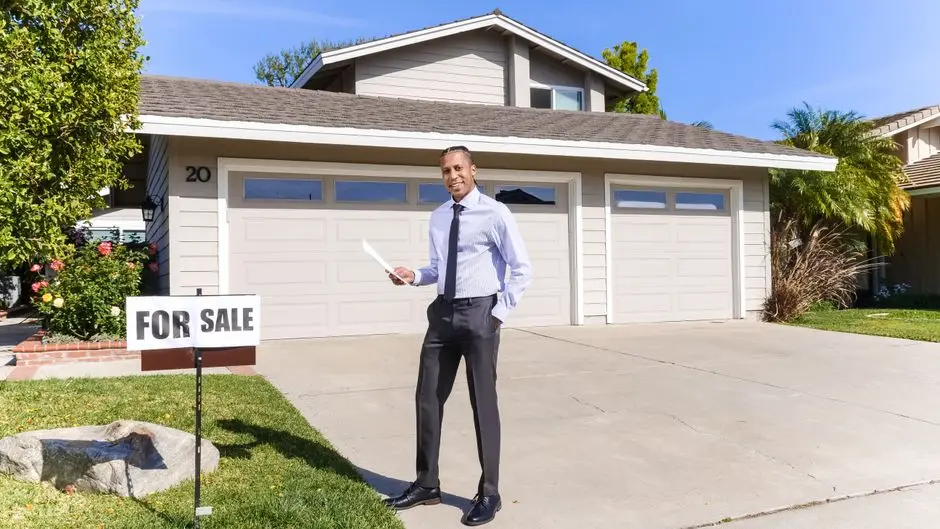
Photo by Kindel Media on Pexels
Why Your Listing Description Is a Marketing Asset, Not an Afterthought
Most agents spend hours staging a home, coordinating professional photography, and negotiating price, then dash off a listing description in five minutes. That disconnect is costly. The written description is often the first element a buyer reads after seeing photos, and it shapes whether they book a showing or scroll past to the next result.
The national housing market underscores just how much every advantage matters. The median home sales price in the United States was $393,300 as of the third quarter of 2026, and the average 30-year fixed mortgage rate was 7.18 percent as of November 2026. At that rate environment, buyers are deliberate and selective. They are not booking showings casually. Your description needs to give them a compelling reason to take that next step.
The good news is that strong listing copy is a learnable skill, and once you build a repeatable system for it, the quality compounds across every listing in your pipeline.
The Anatomy of a High-Converting Listing Description
A listing description that drives showings is not simply a list of features. It is structured persuasion. Think of it in four parts: the hook, the highlights, the lifestyle invitation, and the call to action.
1. The Hook (First 1 to 2 Sentences)
Buyers often skim the first line before deciding whether to read further. Your opening sentence needs to do real work. Lead with the most compelling, concrete detail about the property, not a generic filler phrase like "Welcome to this stunning home!"
Instead of: "Welcome to this beautiful 4-bedroom home in a great location!" try: "Soaring 10-foot ceilings, an open-concept kitchen with quartz waterfall countertops, and a private backyard retreat make this 4-bedroom a rare opportunity in the 78704 zip code."
Specificity signals credibility and helps buyers self-select. The more concrete your hook, the more likely the right buyer reads on.
2. The Highlights (Body Copy)
After the hook, walk through the property's most notable physical features in a logical order. A common structure that works well is: interior flow, kitchen, primary suite, secondary spaces, outdoor areas, and then practical upgrades (HVAC, roof, windows, garage).
A few principles to follow throughout the body:
- Use sensory language. "Warm oak hardwood floors" is more evocative than "hardwood floors throughout."
- Translate features into benefits. "New insulated windows installed in 2024 keep energy bills predictable year-round" does more than "new windows."
- Be accurate. Overpromising in copy leads to disappointed showings and erodes your credibility. Describe what is actually there.
- Avoid filler adjectives. Words like "stunning," "gorgeous," and "amazing" are overused and carry no information. Replace them with descriptive specifics.
3. The Location and Surrounding Amenities
Buyers want context about what surrounds the property. You can describe proximity to parks, trails, transit corridors, employment centers, dining, and retail using objective distances and factual details, without making any characterizations about who lives in the area or implying that the location is more or less suitable for any particular group of people.
Stick to physical and geographic facts: "Two blocks from a 40-acre public park with paved walking trails" or "Less than a mile from the light rail station at Third and Main." This keeps your copy compliant with fair housing advertising requirements and still gives buyers the context they are looking for.
4. The Call to Action
End with a direct, low-friction invitation to take the next step. Something as simple as "Schedule your private showing today" or "Contact us to arrange a walkthrough at your convenience" works well. Keep it brief and confident.
Common Mistakes That Kill Showing Requests
Even experienced agents fall into predictable traps when writing listing descriptions. Here are the most common ones, along with quick fixes.
- Repeating the data fields. The MLS already shows square footage, bed count, and bath count. Restating them in the narrative wastes space. Use that space to add color and context instead.
- Passive or vague verbs. "Home features a kitchen" is weaker than "The kitchen delivers." Small word choices accumulate.
- Skipping the upgrades. Sellers know about the new roof, new HVAC, and updated electrical panel. Buyers need to hear about them in the description, not just the agent remarks.
- Writing walls of text. Online readers skim. Use short paragraphs of two to four sentences. Where the portal allows, consider a brief bulleted highlights section at the end.
- Ignoring character limits. Most MLS systems cap public remarks at 1,000 to 2,500 characters. Write your draft, then edit it down. Constraints force clarity.
SEO and Keyword Strategy for Listing Copy
Listing descriptions are indexed by search engines and aggregators like Zillow, Realtor.com, and Redfin. That means thoughtful keyword placement can expand organic reach beyond your direct MLS syndication.
Include the city name, zip code, and neighborhood name naturally in the text. Reference architectural styles, feature-specific terms buyers search for (such as "open floor plan," "primary suite with walk-in closet," or "attached two-car garage"), and any notable amenity that might be a search trigger.
Avoid keyword stuffing. One well-placed mention of a searchable term is more effective than repeating it three times in awkward ways. The description should read naturally to a human first, with search terms woven in rather than forced.
If you have your own agent website with IDX integration, your listings and their descriptions live on a page you control. A platform like Local Edge Marketing Co. includes a custom IDX website with lead capture forms and a home value estimator, so every visitor to your listing page has a path to becoming a lead in your pipeline.
Building a Repeatable Description System
Top-producing agents do not start from a blank page every time. They build templates and checklists that make strong copy faster to produce without sacrificing quality.
Start by creating a property intake checklist you fill out during every listing appointment. Include prompts for: year built, all major updates and their dates, unique architectural details, storage highlights, outdoor features, proximity to key destinations (with distances), and any seller-provided disclosures about upgrades. The richer your intake notes, the easier the copy becomes.
From there, build a library of reusable phrases organized by feature type. Kitchen phrases, primary suite phrases, outdoor phrases, and so on. These are starting points, not final copy, but they dramatically cut drafting time and ensure you do not forget to mention important elements.
A CRM with email templates and customizable communication tools can support this system. With Local Edge Marketing Co., the Pro plan at $129 per month includes reusable email templates with merge fields, so follow-up communication to listing inquiries can be just as polished and consistent as the descriptions themselves. A 14-day free trial with full access and no credit card required makes it easy to explore whether the platform fits your workflow.
Following Up on Showing Requests Like a Pro
A strong listing description gets the showing request. What happens next determines whether that showing becomes an offer. Speed and consistency in follow-up are non-negotiable in a competitive market.
Once a buyer or buyer's agent reaches out, your response time shapes their first impression of how you operate. The best agents respond within minutes, not hours. Tools that support this include built-in calling and two-way SMS from lead profiles, so you can reach out from wherever you are without switching apps or losing the conversation thread.
After the showing itself, a timely follow-up with the buyer's agent or directly with unrepresented buyers keeps the momentum going. Automated drip campaigns can handle nurture sequences for leads who showed interest but did not move forward immediately, keeping your listing top of mind without requiring manual effort every day.
For teams managing multiple active listings, shared lead pipelines with stage tracking and team-wide visibility help ensure no inquiry falls through the cracks. The Pro plan on Local Edge Marketing Co. supports team member seats at $39 per month per additional seat, with lead sharing and permissions built in.
If you are an Ohio-based agent and the volume of active transactions is stretching your bandwidth, the transaction coordinator service handles contract-to-close coordination so you can stay focused on the front-end work, including writing the listings that fill your pipeline in the first place.
Putting It All Together
Strong listing descriptions are not about flowery language or superlatives. They are about specificity, structure, and giving the right buyer enough concrete information to feel confident booking a showing. In a market where the median home sales price was $393,300 as of the third quarter of 2026 and buyers are navigating rates that reached 7.18 percent as of November 2026, every word in your listing has work to do.
Build your intake system, refine your templates, distribute through every channel available to you, and back it up with a fast, consistent follow-up process. That combination turns a well-written description into actual closed business.
Ready to tighten up your marketing systems and make sure every showing request lands in a pipeline you can actually manage? Explore the tools available at Local Edge Marketing Co., or browse more agent marketing strategies on our blog. If you have questions about how the platform fits your business, our team is happy to help. Reach out to us and we can walk you through everything.